
Human Serum Albumin Antibody


ELISA, Immunohistochemistry, IF Microscopy, Western Blot
Rabbit
H. sapiens (Human)
IgG
Polyclonal
Human Serum Albumin
rabbit anti-human serum albumin antibody, rabbit anti-HSA antibody, Analbuminemia antibody, rabbit anti-serum albumin antibody, rabbit anti-albumin antibody


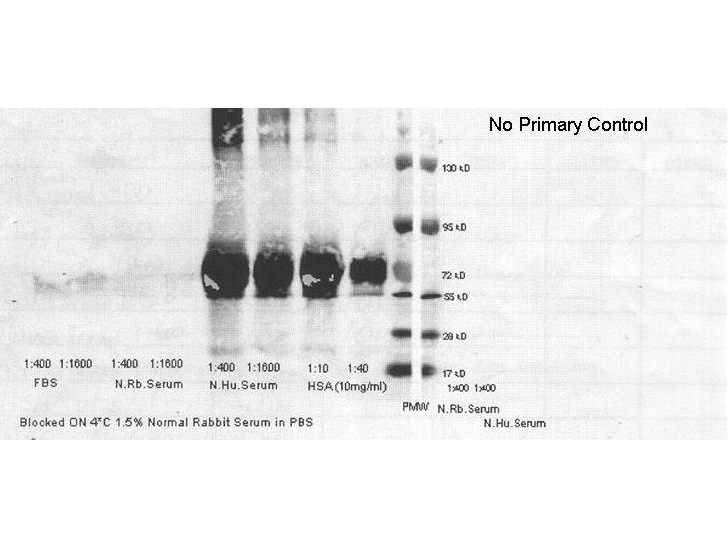
Anti-Human Serum Albumin Antibody detects serum albumin which is the most abundant protein in human blood plasma. Serum albumin is produced in the liver and constitutes about half of the blood serum protein. It is soluble and monomeric, and is shown to transport hormones, fatty acids, and other compounds, buffers pH, and maintains osmotic pressure, among other functions. Albumin is synthesized in the liver as preproalbumin, which has an N-terminal peptide that is removed before the nascent protein is released from the rough endoplasmic reticulum. The product, proalbumin, is in turn cleaved in the Golgi vesicles to produce the secreted albumin. The reference range for albumin concentrations in blood is 3.4 to 5.4 g/dL. Serum Albimin has a molecular mass of 67 kDa. This antibody is suitable for researchers in cardiovascular research, Serum Protein Component research, as well as general research. Anti-Human Serum Albumin Antibody has been tested by ELISA, SDS-PAGE, dot blot, and western blot. This product is suitable for the detection of human serum albumin in blood and tissue samples. Antibody is suitable for western blotting to detect a single band of 67 kDa, the expected apparent molecular weight, and for use in ELISA. Researchers should determine optimal titers for applications that are not stated below.