
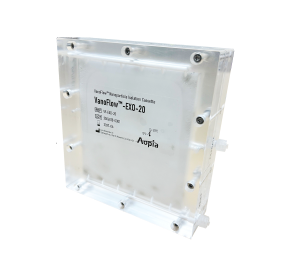
Traditional extracellular vesicle (EV) isolation approaches such as ultracentrifugation, tangential flow filtration, ultrafiltration and size exclusion chromatography demand hands-on steps, can take anywhere from hours to days, and add variability to output materials. The Aopia NanoEX is a fully automated bio-nanoparticle isolation platform built to change that, delivering high recovery and purity while reducing the amount of hands-on time required per run, automating the majority of the workflow. The time-saving benefits of the NanoEx platform translate into cost savings and long term workflow advantages for labs across the academic and biotech sectors.
How does the NanoEx save time?
- Full automation of sample processing: load samples and reagents and simply press a button. The system performs filtration, concentration and collection, removing multiple manual steps compared with bench workflows and freeing up time for other responsibilities.
- High throughput & scalable run times: the platform can process sample volumes in the range of 10ml-2L in a matter of hours, almost halving the time taken by traditional methods. This can support labs in the move from single-sample batch work to higher-volume, predictable runs.
- Reproducibility and lower hands-on time: closed cassettes and automated pressure sensing reduce cleaning, repeated hands-on interventions, and cross-contamination risks, which translates to saved technician minutes and fewer repeat runs.
How the NanoEx can save time for academic researchers
Academic labs are often limited by the size of their teams and access to equipment. Alongside the need for lots of exploratory experiments and irregular sampling schedules, this results in much longer timeframes for projects than is ideal. The NanoEx can cut this timeframe down for many reasons:
- Much less technician time per sample: instead of standing at the bench for multi-step enrichments, a student can set up a run and use that time for analysis, writing, or planning next experiments. The impact is felt immediately when juggling teaching, literature research and parallel experiments.
- Faster iteration cycles: faster, consistent isolations mean more experimental repeats in the same week, speeding up optimisation of protocols or biomarker screens. Where ultracentrifugation-based workflows might allow for three useful runs a week, a high-throughput automated process can double or triple that capacity for hands-off runs.
- Lower barrier for non-specialists: students or new postdocs can generate quality EV preps without months of practice. This shortens training time and reduces the supervision required. The closed-cassette design of the NanoEx contributes greatly here.
- Easier scheduling: with predictable, automated runs, the NanoEx can facilitate more runs per day with standardised timeslots, making sample preparation easier to plan and fit into project schedules.
How the NanoEx can make a difference for the biotech industry
Time-saving requirements for teams in the biotech industry originate from differing priorities to those in academia. Constraints for the biotech industry include throughput targets, regulatory and documentation needs, milestone timelines, and often larger, multi-person workflows.
What NanoEX changes for biotech:
- Predictable, scalable throughput: pharma and biotech need predictable run times and batch sizing for process development and early manufacturing. NanoEX’s ability to process larger volumes in predictable windows shortens project timelines and speeds up decisions.
- Reduced process development time: automated, reproducible isolation reduces variability between runs, which lowers the number of optimisation cycles required to reach release criteria, a major time and cost saver during process development.
- Operational efficiencies at scale: for teams moving from research to translational work (e.g. LNPs, gene therapy vectors, EV therapeutics), automated platforms reduce manual QC bottlenecks and free specialist staff to focus on downstream analytics and regulatory documentation.
Tips to maximise time savings
- Plan runs in batches: group similar sample types to reduce setup changes and validation repeats.
- Automate post-isolation QC (NTA, protein assays in plate format) so NanoEX’s outputs go directly into analytics pipelines.
- Train multiple users on the instrument early. This multiplies the hands-off time benefits.
- Factor validation time into biotech project timelines. The biggest time gains come after the initial integration.
Bottlenecks of hands-on time, unpredictable run lengths, and low reproducibility are felt in different ways by researchers in academia and biotech. An automated EV isolation platform like the Aopia NanoEX can turn days of bench work into predictable hours of instrument time. This will be felt by academics as faster experiments and students freed for other tasks. Biotech teams will feel it as faster development cycles and more predictable scale-up. The upfront investment in integration and consumables pays off, with the streamlined workflows translating directly to saved researcher hours and faster project timelines.
Contact our Aopia specialists to arrange a demo of the NanoEX platform. Full training can also be provided for lab members after purchase.