
Identifying a potential therapeutic target is a critical first step in drug discovery, but identification alone is not enough. Before significant time and resources are invested in screening compounds or developing therapeutics, researchers must establish whether modulating that target will genuinely influence disease progression. This process, known as target validation, provides the evidence needed to determine whether a target is biologically relevant, therapeutically actionable and capable of delivering meaningful clinical benefit.
At a glance
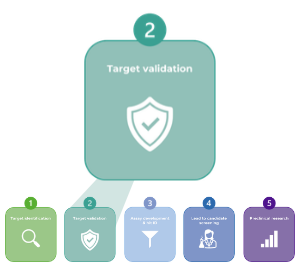
Target validation is the second stage of the drug discovery workflow. Its purpose is to confirm that a previously identified target plays a causal role in disease and that altering its activity produces the desired biological effect
Researchers use a combination of genetic, molecular, cellular and in vivo approaches to investigate target function, understand mechanisms of action and assess target engagement. Common applications include:
- Gene editing and knockdown
- Functional validation
- Mechanism of action studies
- Target engagement analysis
Successful target validation provides confidence that a target is suitable for therapeutic intervention and justifies progression into assay development, hit discovery and lead optimisation. Conversely, inadequate validation can lead to costly failures later in the drug development process.
Why target validation matters
The history of drug discovery contains countless examples of promising targets that ultimately failed to translate into effective therapies. In many cases, the target was associated with disease but was not actually responsible for driving it.
This highlights a crucial distinction. Target identification seeks to uncover potential disease-relevant molecules or pathways. Target validation seeks to answer a more demanding question: does changing this target alter disease biology in a beneficial way?
Human diseases are highly complex, involving multiple signalling pathways, cell types and compensatory mechanisms. A target may appear highly relevant based on genomic or transcriptomic data, yet have little functional impact when experimentally manipulated.
For this reason, modern drug discovery programmes place significant emphasis on generating functional evidence before advancing a target further through the pipeline.
From association to causation
One of the primary objectives of target validation is to establish causality. Initial discovery efforts often reveal genes, proteins or pathways associated with a disease state. However, association does not necessarily indicate that a target is driving disease progression. Some molecular changes are simply downstream consequences of pathology rather than true disease drivers.
Target validation therefore focuses on determining whether direct manipulation of the target produces measurable changes in disease-relevant phenotypes.
Researchers may ask questions such as:
- Does suppressing the target reduce disease activity?
- Does increasing target expression worsen pathology?
- Can disease-associated cellular behaviours be reversed through target modulation?
- Does target engagement produce the expected biological response?
Answering these questions helps researchers distinguish promising therapeutic opportunities from biological dead ends.
Gene editing and functional genomics approaches
Advances in functional genomics have advanced the target validation landscape. Gene editing technologies, particularly CRISPR-based systems, enable researchers to directly investigate gene function by introducing targeted genetic modifications. Knockout studies can reveal whether loss of a target affects disease-relevant pathways, while gene activation or overexpression experiments can demonstrate the consequences of increased activity.
RNA interference and knockdown approaches provide additional methods for reducing gene expression and assessing biological function. Together, these technologies allow researchers to move beyond observational data and directly test therapeutic hypotheses in relevant model systems.
Solutions from suppliers such as OriGene support these workflows through gene knockdown and knockout tools, as well as expression vectors that enable researchers to investigate target function with greater precision.
Understanding mechanism of action
Researchers must also understand how and why a target influences disease biology. Mechanism of action studies examine the pathways and biological processes affected by target modulation. These investigations help establish whether a target sits at a critical control point within disease-relevant networks and identify potential opportunities or risks associated with therapeutic intervention.
The deeper the mechanistic understanding, the greater the confidence researchers can have when advancing a target into subsequent stages of drug discovery. Modern validation programmes increasingly combine molecular profiling, pathway analysis and cell-based functional assays to build comprehensive mechanistic evidence.
Building confidence with advanced cellular models
Cell-based models play a fundamental role in target validation. Once a target has been identified, researchers require experimental systems capable of reproducing relevant biological responses. Disease-relevant cellular models allow scientists to evaluate the effects of genetic or pharmacological manipulation under controlled conditions while generating evidence that links target activity to disease phenotypes.
This is an area where BPS Bioscience offers particular value. Its portfolio includes knockout and overexpression cell lines, cell-based assays and target engagement assays that help researchers investigate target function and generate the evidence required to support validation decisions.
By combining engineered cellular models with functional assays, researchers can rapidly assess whether a target warrants further investment.
Delivering genes and biological tools into cells
Many target validation experiments rely on the efficient delivery of nucleic acids, proteins or gene-editing systems into cells.
Transfection and viral delivery technologies enable researchers to introduce expression constructs, CRISPR components and other molecular tools required for functional studies. The quality and efficiency of delivery can directly influence experimental outcomes and the reliability of generated data.
Mirus Bio supports these applications with transfection reagents and viral delivery systems designed to facilitate robust gene expression and functional validation studies across a wide range of cellular models.
Meanwhile, high-efficiency competent cells from Lucigen support the upstream molecular biology workflows required for plasmid construction, cloning and vector preparation, providing researchers with the foundational tools needed to execute validation studies effectively.
Validating targets in complex biological systems
While in vitro models generate valuable information, many targets ultimately require validation within more complex biological environments. In vivo studies allow researchers to investigate target function in the context of whole-organism physiology, immune responses and disease progression. These experiments can uncover effects that may not be apparent in simplified cellular systems.
Bio X Cell provides in vivo functional antibodies and immune modulation tools that support these studies, helping researchers evaluate target function and therapeutic mechanisms within biologically relevant settings.
Researchers also frequently rely on flow cytometry and immunohistochemistry to characterise cellular responses and assess biological outcomes. Detection reagents from suppliers such as Jackson ImmunoResearch support these analyses by enabling detailed examination of target expression and pathway activity.
Target engagement: proving you're hitting the target
One of the most important aspects of validation is demonstrating target engagement. Even if a therapeutic approach produces a biological effect, researchers must establish that the response results from interaction with the intended target rather than off-target activity.
Target engagement assays provide direct evidence that a target is being modulated within the relevant biological context. These studies help connect molecular interaction with downstream biological outcomes and are increasingly regarded as a critical component of target validation strategies.
Generating robust target engagement data improves confidence in the target itself while reducing risk as programmes advance toward screening and lead discovery.
Key challenges in target validation
Despite considerable advances in technology, target validation remains a complex process. Several challenges can complicate interpretation:
- Disease biology often involves multiple interconnected pathways.
- Different model systems may produce conflicting results.
- Genetic compensation can mask target function.
- Human disease mechanisms are not always faithfully represented in experimental models.
Demonstrating causality requires extensive and reproducible evidence.
For these reasons, modern target validation typically relies on multiple approaches rather than a single experimental technique. Combining genetic, cellular, molecular and functional evidence helps build a stronger and more reliable case for therapeutic intervention.
Laying the groundwork for successful drug discovery
Target validation serves as the critical bridge between biological discovery and therapeutic development. Through gene editing, functional genomics, target engagement studies and advanced cellular models, researchers can establish whether a target truly represents an actionable opportunity for intervention. The strength of this evidence often determines the likelihood of success during later stages of drug discovery.
In the next article in this series, we'll explore the next phase of the workflow: assay development and hit identification, where validated targets are translated into screening strategies capable of uncovering promising therapeutic candidates.
This blog forms part of our drug discovery workflow series. Read more related content - Cambridge Bioscience: Life science blog.
References
Cook, N., Jodrell, D. I., Tuveson, D. A., & colleagues. (2014). Lessons learned from the fate of AstraZeneca's drug pipeline: A five-dimensional framework. Nature Reviews Drug Discovery, 13(6), 419-431. https://doi.org/10.1038/nrd4309
Plenge, R. M., Scolnick, E. M., & Altshuler, D. (2013). Validating therapeutic targets through human genetics. Nature Reviews Drug Discovery, 12(8), 581-594. https://doi.org/10.1038/nrd4051
Brennan, P. E., Edenius, M., Brooijmans, N., et al. (2021). Improving target assessment in biomedical research: The GOT-IT recommendations. Nature Reviews Drug Discovery, 20(1), 64-81. https://doi.org/10.1038/s41573-020-0087-3
Jia, Z.-C., Yang, X., Wu, Y.-K., Li, M., Das, D., Chen, M.-X., & colleagues. (2024). The art of finding the right drug target: Emerging methods and strategies. Pharmacological Reviews, 76(5), 896-914. https://doi.org/10.1124/pharmrev.123.001028