The transition to high-throughput nucleic acid extraction is rarely a sudden event, but emerges gradually as research programmes expand, sample volumes increase, and project timelines become more demanding. What begins as a manageable manual workflow can become increasingly difficult to sustain as laboratories balance multiple studies and higher expectations for reproducibility.
It is critical for a lab to assess whether its current extraction workflow is capable of scaling alongside growing research demands, before that demand overtakes capabilities.
Early signs a lab is outgrowing single-prep workflows
In the early stages of research, single-sample extraction methods often provide the flexibility and simplicity needed for exploratory studies. As projects mature, however, laboratories frequently encounter new operational pressures.
Common indicators that a workflow may be reaching its limits include:
- Increasing sample volumes across multiple studies
- Growing demand for both DNA and RNA extraction from diverse sample types
- Greater emphasis on standardised protocols and reproducible results
- More researchers performing the same workflow across different projects
- Tightening timelines that leave less room for manual processing bottlenecks
As these demands grow, maintaining consistency becomes more challenging, making workflow scalability an increasingly important consideration.
The operational limitations of manual extraction
Many laboratories continue using manual extraction methods because they appear to meet current needs. However, inefficiencies often become apparent long before a lab considers itself "high throughput."
Some of the most common challenges include:
- Increased hands-on processing time as sample numbers rise
- Serial rather than parallel sample handling
- Reduced laboratory productivity due to repetitive manual steps
- Greater risk of operator-to-operator variability
- Longer turnaround times for downstream analyses
These factors can impact workflows supporting applications such as RT-qPCR, sequencing, and gene expression analysis. In many cases, manual processing becomes a bottleneck to research progress before sample volume alone justifies automation.
What does "high-throughput ready" really mean?
A common misconception is that high-throughput readiness begins with automation equipment. In reality, scalability starts with the extraction chemistry itself.
A high-throughput-ready workflow should offer:
- Compatibility with manual, plate-based, and automated formats
- Consistent performance across varying sample numbers
- Support for parallel processing workflows
- Minimal protocol changes when scaling operations
- The flexibility to grow alongside evolving research needs
This approach allows laboratories to build future scalability into their workflows today, reducing the need for disruptive process changes later.
Preparing for growth with magnetic bead-based extraction
Magnetic bead-based nucleic acid extraction has emerged as a preferred approach for laboratories seeking greater scalability and workflow flexibility. Unlike traditional centrifugation-based methods, magnetic bead chemistries are inherently suited to parallel processing and automation while remaining practical for small-batch manual workflows.
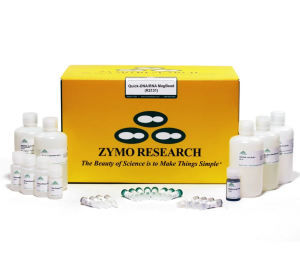
The Zymo Quick-DNA/RNA MagBead kits help laboratories prepare for future growth by providing:
- A magnetic bead-based workflow that scales from low to high sample volumes
- Compatibility with manual, semi-automated, and automated processing
- Consistent extraction chemistry across workflow formats
- Simplified transitions to higher-throughput platforms
- A single solution for both DNA and RNA purification needs
Researchers can therefore increase capacity over time without fundamentally changing protocols or retraining laboratory staff.
Scaling without disrupting ongoing research
One of the greatest challenges in adopting new technologies is avoiding disruption to active research programmes. Introducing a completely different extraction platform often requires extensive optimisation, validation, and training before implementation.
By contrast, laboratories that adopt scalable magnetic bead-based workflows early can build familiarity with the technology while continuing to operate within existing infrastructure. As throughput demands increase, researchers can move toward semi-automated or fully automated platforms using the same extraction principles and workflow design.
This continuity helps minimise workflow disruptions while supporting long-term laboratory growth.
A unified approach for DNA and RNA purification
As discovery research expands, the ability to process both DNA and RNA efficiently becomes increasingly valuable. Running separate extraction systems for different nucleic acid targets can add complexity to laboratory operations and create unnecessary workflow variation.
Key advantages of a unified DNA/RNA extraction approach include:
- Simplified workflow standardisation across projects
- Reduced training requirements for laboratory personnel
- Greater operational efficiency as sample volumes increase
- Easier adoption of automated and parallel processing workflows
- Improved consistency across downstream applications
The Zymo Quick-DNA/RNA MagBead kits support this streamlined approach, enabling laboratories to maintain a common extraction workflow while accommodating diverse research needs.
Looking ahead
For most discovery laboratories, the decision to adopt high-throughput-ready extraction workflows should not be based solely on current sample numbers. The more strategic question is whether the current workflow can support future research demands.
Laboratories that implement scalable technologies early are often better positioned to accommodate growth, standardise processes, and reduce workflow bottlenecks as projects expand. By adopting magnetic bead-based extraction solutions such as the Zymo Quick-DNA/RNA MagBead Kits, researchers can prepare for increasing throughput requirements without disrupting the science they are conducting today.
Get in touch with our Zymo specialists today for support with scaling your workflows.