
In discovery-phase research, scientists rely on high-quality starting material to generate reliable data and insights. Whether working with cell-based assays, gene expression studies, screening campaigns, or other molecular workflows, the consistency of extracted nucleic acid can have a significant impact on experimental outcomes. A challenge often overlooked is yield variability i.e., the fluctuation in the amount of material recovered from comparable samples during extraction and preparation.
Variability in yield can introduce technical noise, complicate assay setup, and reduce confidence in downstream data. In an environment where it is necessary to detect subtle biological signals, inconsistent sample recovery can become a major obstacle to reproducibility and efficient decision making.
The hidden cost of inconsistent yield in assay setup
Yield variability can create significant challenges long before data analysis begins. When nucleic acid concentrations differ between samples, additional time and resources are needed to normalise assay inputs, introducing complexity into what should be a standardised workflow. As studies scale, these inconsistencies can affect efficiency, reproducibility, and overall project timelines, making yield consistency a critical factor in successful discovery research. Inconsistent yield:
- Complicates assay normalisation by requiring sample-specific input adjustments.
- Reduces workflow consistency by affecting pipetting volumes, reagent use, and plate setup.
- Challenges scalability in automated and high-throughput workflows.
- Increases reruns when low yields require repeat extractions or higher sample inputs.
- Risks sample loss when limited or valuable samples cannot be reprocessed.
- Raises costs through increased reagent consumption, labour, and instrument time.
- Delays project timelines, slowing progress in pharma, CRO, and biotech research.
- Introduces technical variability, making results harder to reproduce and interpret.
How yield variability skews assay interpretation
Beyond workflow inefficiencies, inconsistent yield can significantly impact data quality. Many common analytical readouts, including qPCR Ct values, gene expression fold changes, sequencing inputs, and assay signal intensities, assume a relatively consistent amount of starting material.
When sample recovery varies widely, downstream measurements become more difficult to interpret, obscuring whether observed differences represent genuine biological effects or simply reflect extraction-related variability. This can also contribute to increased batch effects and technical variation across experiments. As variability accumulates, statistical power decreases, making it more difficult to detect subtle phenotypes, weak targets, or modest treatment responses.
This challenge is particularly problematic in early-stage screening. Discovery assays often operate within narrow signal windows, where even small shifts in assay input can influence how potential hits are identified and prioritised. If starting material is inconsistent, confidence in hit-calling and downstream validation can be compromised.
Why predictable yield supports better experimental design
Consistent extraction performance provides a strong foundation for efficient experimental design. Confidently standardising assay inputs becomes easier when the amount of DNA or RNA recovered is predictable, reducing the need for extensive normalisation.
This consistency becomes increasingly valuable in automated and high-throughput workflows. Standardised sample inputs support scalable plate-based studies, screening, and platform-development activities while reducing workflow complexity.
For organisations managing multiple projects simultaneously, predictable yield also helps ensure sample equivalence across experimental conditions. This reduces the likelihood that technical variability will confound biological interpretation, allowing researchers to focus on the questions they are trying to answer rather than troubleshooting upstream inconsistencies.
Ultimately, a consistent extraction workflow improves reproducibility, streamlines operations, and strengthens confidence in the resulting data.
Reducing variability with Quick-DNA Plus kits
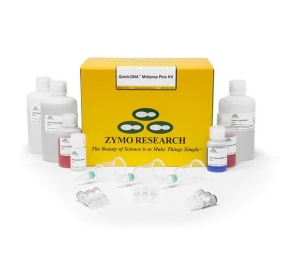
Quick-DNA Plus kits are designed to deliver both high DNA recovery and consistent performance across a wide range of sample types.
Key benefits include:
- Up to 125 µg of genomic DNA yield, helping ensure sufficient material for downstream applications.
- Ultra-pure, NGS-ready DNA, reducing downstream noise and quality-control challenges.
- Compatibility with cells, solid tissue, blood, and environmental samples, supporting diverse discovery workflows.
- Inclusion of DNA/RNA Shield™, which helps stabilise samples during storage and transport to improve upstream consistency.
The value of predictable high yield
Consistent yield is a critical contributor to data quality. Predictable high-yield recovery supports stronger replicates, cleaner controls, and more reliable comparisons across experimental groups.
For applications such as screening, phenotyping, omics studies, and comparative analyses, reliable input material enables more confident interpretation of results and reduces the risk of technical artifacts influencing key decisions.
As discovery workflows continue to scale in complexity and throughput, reducing variability at the sample preparation stage becomes increasingly important. By prioritising extraction methods that combine high yield with consistency, research teams can improve reproducibility, accelerate workflows, and generate more reliable insights from every experiment.
Try a free sample of the Quick-DNA Miniprep kit, or contact our Zymo specialists to dsicuss your requirements.