
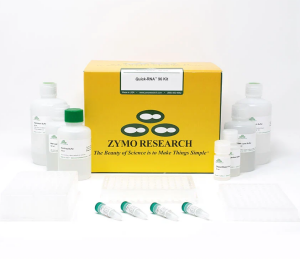
As demand for RNA analysis continues to grow across genomics, transcriptomics, biomarker discovery, and diagnostic research, many laboratories face a common challenge: how to increase throughput without compromising consistency. Additional samples frequently lead to additional steps, greater operator involvement, and more opportunities for variability to enter the process. For laboratories handling dozens or hundreds of samples per day, maintaining control becomes just as important as increasing capacity.
Fortunately, high-throughput RNA purification technologies are helping laboratories expand output without expanding operational complexity.
The challenges of scaling RNA workflows
Increasing throughput is rarely as simple as multiplying an existing workflow. Protocols that perform well for a small number of samples can become difficult to manage when applied across entire plates or multiple batches. As sample volumes increase, laboratories often encounter:
- Longer processing times
- Increased hands-on effort
- Greater risk of sample handling errors
- More protocol variation between operators
- Additional troubleshooting and repeat extractions
These challenges can slow productivity and make it more difficult to generate reproducible results across large datasets.
Why scale introduces errors and variability
Even minor inconsistencies can have a significant impact when processing large numbers of samples. Manual handoffs between workflow stages, varying operator techniques, and complex decision points can all introduce variability into RNA extraction procedures. As throughput increases, small errors become amplified. Differences in timing, handling, or protocol execution that may have little impact on a handful of samples can result in measurable well-to-well variation across larger studies. The result is often increased rework, reduced confidence in data quality, and additional pressure on laboratory teams.
Workflow simplicity enables throughput
One of the most effective ways to overcome these challenges is to reduce workflow complexity rather than add more controls. Simple, standardised workflows minimise opportunities for error and help ensure consistent processing across large sample sets. Plate-based extraction formats are particularly valuable because they allow samples to be processed in parallel using the same workflow steps and conditions.
A straightforward bind-wash-elute procedure reduces operator dependency, limits decision points, and supports more reproducible results across users and experiments.
How Quick-RNA™ 96 and Quick-RNA™ 96 Plus kits support workflow scale-up
Designed specifically for high-throughput applications, Zymo Research's Quick-RNA™ 96 and Quick-RNA™ 96 Plus kits simplify RNA purification into a consistent, plate-based workflow that can support large sample volumes without increasing operational complexity. By enabling simultaneous processing of up to 96 samples, these kits help laboratories increase throughput while maintaining workflow control and RNA quality.
Designed for robust scaling
A major advantage of the Quick-RNA 96 platform is protocol consistency. The same workflow is applied across every well in the plate, helping minimise well-to-well variation and reducing the likelihood of operator-induced errors.
Rather than introducing additional process steps as sample numbers grow, laboratories can scale through parallel processing. This approach helps maintain consistency while reducing the need for repeat extractions and troubleshooting.
Balancing automation and flexibility
Laboratories scale at different rates and often have varying levels of automation infrastructure. The Quick-RNA 96 and Quick-RNA 96 Plus kits are designed to accommodate this reality. The workflow is compatible with:
- Vacuum manifold processing
- Centrifugation-based processing
- Automated liquid handling systems
This flexibility allows laboratories to adopt high-throughput RNA extraction methods that match their current capabilities while providing a clear path toward future automation.
Supporting CRO and CDMO workflows
For contract research organisations (CROs) and contract development and manufacturing organisations (CDMOs), reproducibility and standardisation are critical. Plate-based workflows are inherently easier to validate, transfer between sites, and reproduce across projects. Standardised extraction procedures help ensure consistent performance regardless of operator, location, or client requirements.
As organisations grow or manage multiple customer projects simultaneously, a streamlined and reproducible RNA purification workflow can simplify method transfer and support regulatory expectations.
Increasing output without increasing complexity
Successful scale-up depends on maintaining simplicity as throughput grows. Expanding sample numbers should not require increasingly complex protocols, additional workflow branches, or extensive operator intervention. The Quick-RNA 96 and Quick-RNA 96 Plus kits address this challenge by enabling higher throughput through parallelisation rather than protocol expansion. Laboratories can process more samples in less time while maintaining consistency, reducing variability, and supporting reliable downstream analysis.
For research groups, core facilities, CROs, and CDMOs looking to expand RNA extraction capacity, a standardised high-throughput workflow offers a practical route to scalable operations without the complexity that often accompanies growth.