DNA extraction is a foundational step in molecular biology workflows, directly influencing the performance and reliability of all downstream analytical applications. Even trace amounts of carryover contaminants can have measurable effects on assay efficiency, reproducibility, and data quality.
As molecular workflows become more sensitive and increasingly distributed across users and sites, maintaining consistent DNA quality is a strategic requirement.
Why DNA yield alone is an incomplete quality indicator
Most extraction protocols prioritise recovery. However, high yield does not necessarily equate to high usability. Alongside DNA, extraction processes often co purify unwanted components such as salts, ethanol, detergents, chaotropic agents, proteins, or sample derived inhibitors.
These contaminants can negatively impact downstream workflows by:
- Inhibiting enzymatic reactions in PCR, qPCR, and library prep
- Reducing ligation and amplification efficiencies
- Distorting quantification measurements
- Introducing variability that only becomes apparent after significant time and reagent investment
These issues are not always detectable at the extraction stage. Two samples with similar yields and acceptable absorbance ratios may perform very differently once they enter sensitive enzymatic workflows.
Factors contributing to DNA workflow variability
Even in well managed laboratories, some degree of variability is unavoidable. Differences in user technique, local SOPs, reagent handling, equipment calibration, or water quality can all subtly influence DNA quality. The extraction chemistry itself, whether column based, bead based, manual, or automated, adds further variation, as does sample complexity.
When workflows are scaled across teams or sites, these factors can compound. Over time, it becomes difficult to determine whether downstream variation reflects true biological differences or technical interference introduced upstream.
Rather than attempting to eliminate all extraction variability, many laboratories are adopting a more robust strategy: standardising DNA quality prior to downstream use.
DNA clean up as a standardisation step
A dedicated DNA clean up and concentration step acts as a control step, aligning samples to a equalised purity and compatibility baseline regardless of how they were extracted. This approach helps ensure that downstream performance is driven by biology, not residual chemistry.
An effective clean up step should:
- Reliably remove inhibitory contaminants
- Exchange DNA into a downstream compatible buffer
- Allow flexibility to concentrate or normalise DNA input
- Be simple and reproducible across users and sites
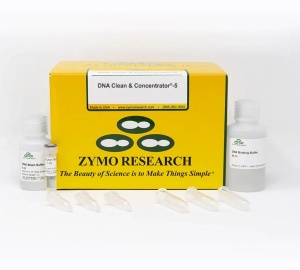
The value of Zymo’s DNA Clean & Concentrator
The Zymo DNA Clean & Concentrator is designed to complement, not replace, existing extraction workflows. By applying a consistent purification chemistry to all samples, it helps counteract variability introduced earlier in the process.
Key advantages include:
- Standardised clean up across extraction methods: reduces differences between column, bead, manual, or automated workflows
- Efficient removal of salts, ethanol, enzymes, and detergents: improves compatibility with downstream enzymatic assays
- Flexible elution volumes: enables DNA concentration and input normalisation without re extraction
- User independent reliability: minimises technique driven differences in shared or high turnover labs
Taken together, these features help ensure that DNA entering downstream workflows meets a consistent quality threshold.
Improving confidence in downstream results
Cleaner, more consistent DNA inputs have clear downstream benefits. PCR and qPCR assays show reduced inhibition and improved reproducibility. NGS library preparation benefits from higher conversion efficiency, fewer failed libraries, and more consistent performance across runs. In collaborative and multi site studies, standardised DNA quality supports more reliable data comparison and integration.
What appears to be a small additional step in the workflow often delivers significant advantages in robustness, saving time, reagents use, and troubleshooting efforts downstream.
Integrating DNA purity into workflow design
DNA purity impacts every downstream result, yet it is often addressed only after problems arise. Incorporating a standardised clean up step such as the Zymo DNA Clean & Concentrator allows laboratories to proactively manage variability introduced by users, sites, and extraction methods.
If you are ready to start downstream workflows with DNA that is consistently clean, concentrated, and compatible, request a free sample of DNA Clean & Concentrator.